Annapurna (ACAP) — Miristi Khola · Pokhara → Pokhara
Panchakunda & North Annapurna Base Camp
Five days to a cluster of glacial lakes at 4,050m, on the quiet side of the massif.
5 days4,190mdemanding
Panchakunda, October 2025
Remote, with a fast ascent and basic facilities: three walking days from the Humkhola roadhead at 2,883m to the lakes at 4,050m, and the base camp at 4,190m on the crux day. The quiet side of Annapurna, reached through the Miristi Khola — few other trekkers, and you're more likely to see blue sheep than another group. Rescue is further away here than on the popular trails.
- Duration
- 5 days
- Nights away
- 4
- Walking days
- 3
- Highest point
- 4,190m
- Difficulty
- Demanding
- Daily walking
- to be confirmed
- Starts and ends
- Pokhara
- Best months
- October, November, March, April
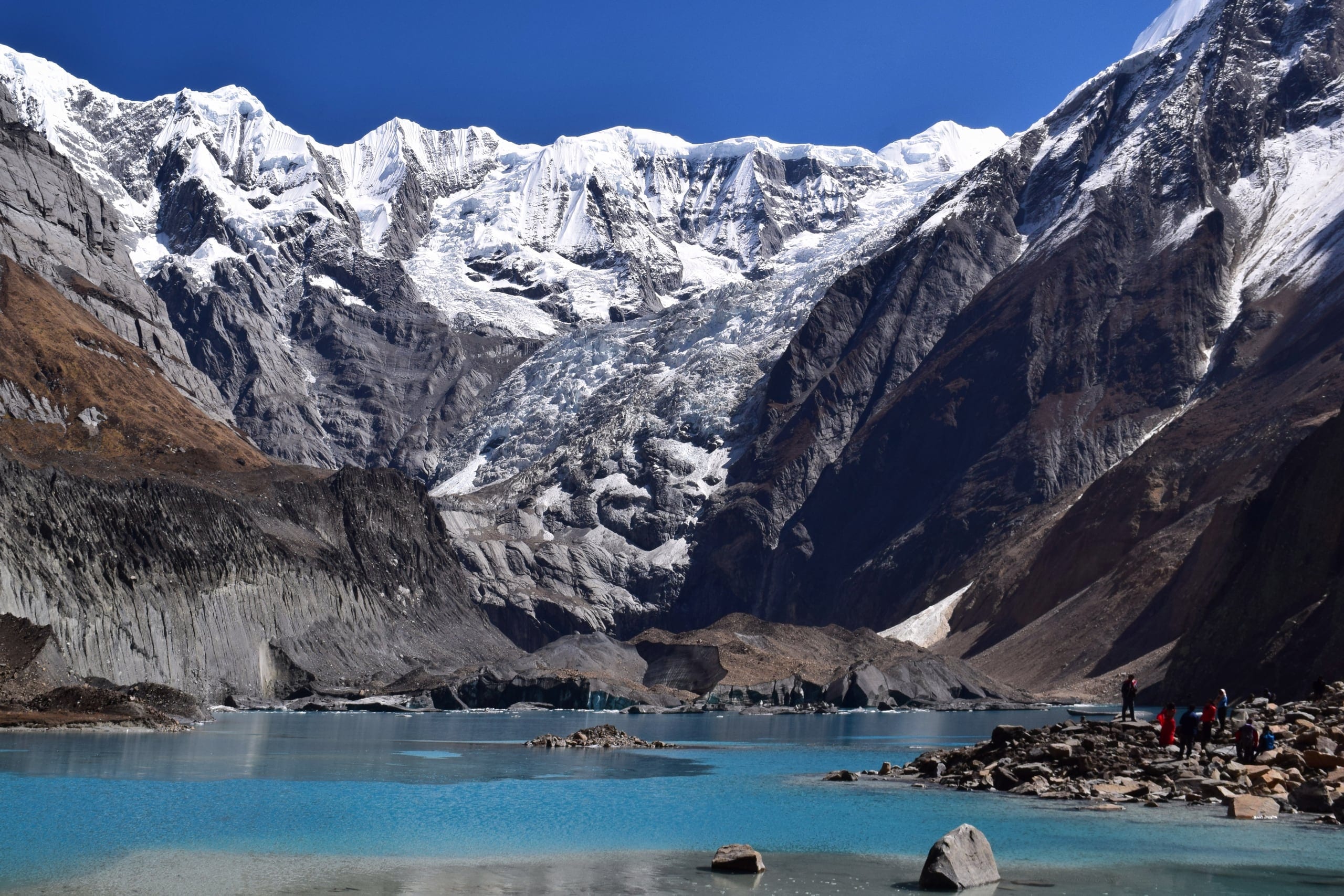
Panchakunda lakes — 4,050m. Where you sleep on night three. The base camp above is reached the following morning.
The crux is day 4: up to 4,190m, then nearly 1,000m of descent to Sandi Kharka.
What it costs
We have not costed this route yet, and we will not put a number on this page before we have. Message us and we will quote it properly for your group size and dates.
Day by day
Where you sleep, how far you walk, and what each day is actually like.
Day 1
Pokhara → Tatopani
Sleep to be confirmedno walking
A road day. The walking begins tomorrow.
Nothing but the drive. Tatopani's altitude is still to be confirmed, and so is which Tatopani — there is more than one in Nepal.
Day 2
Tatopani → Humkhola → Phutphute Jharna → Gupha Phat
Sleep 3,350mwalking hours to be confirmed
Two hours by jeep to the Humkhola roadhead at 2,883m, where the trek starts. Past the Phutphute Jharna waterfall and on up to Gupha Phat.
One of the two long days. You gain nearly 500m to sleep at 3,350m, having started the morning in a vehicle.
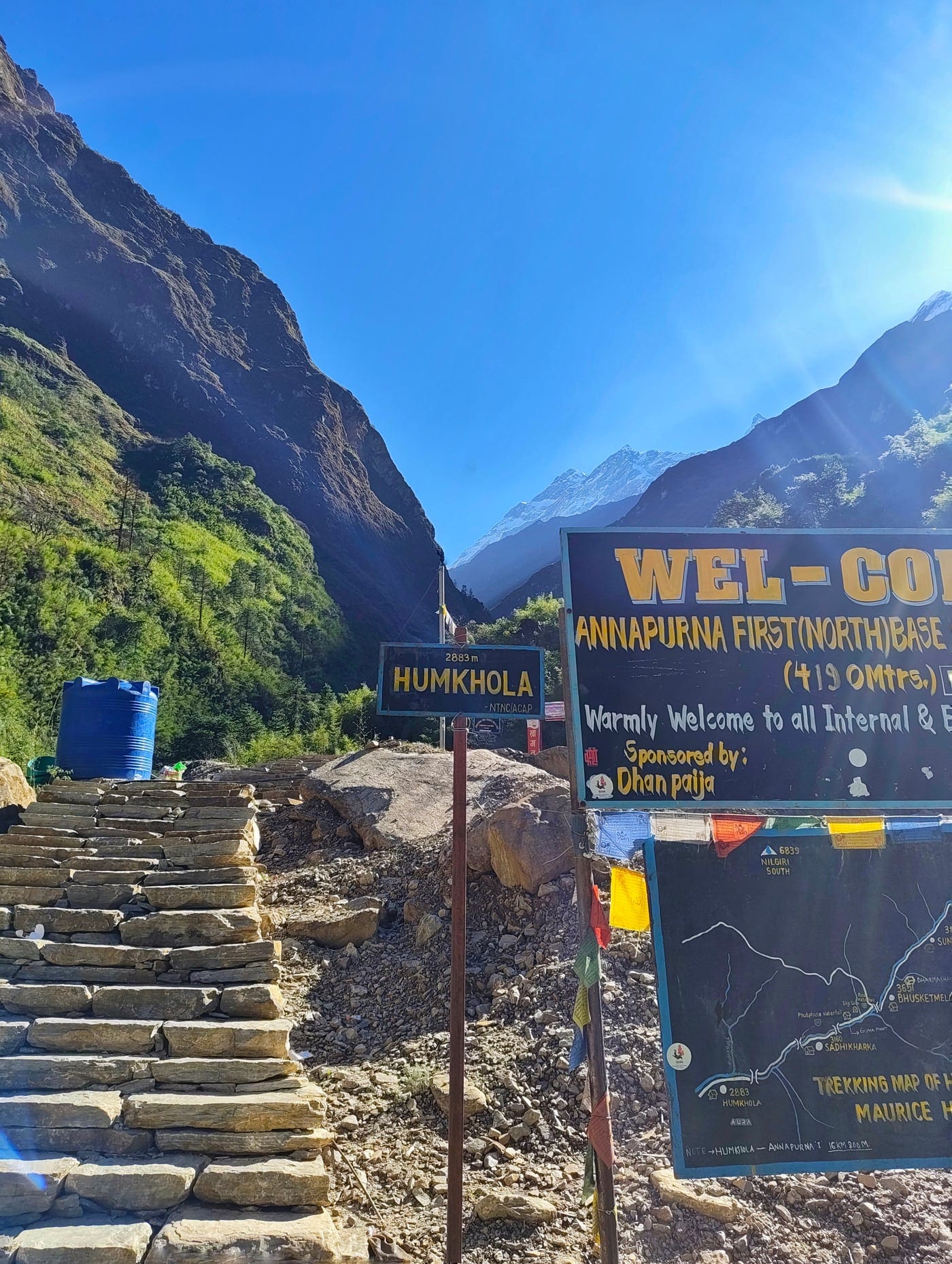
Humkhola, 2,883m, October 2025
Day 3
Gupha Phat → Panchakunda
Sleep 4,050mwalking hours to be confirmed
A 700m gain to sleep at 4,050m. The ascent across these two days is fast and altitude affects people here — the guide sets the pace and watches for it.
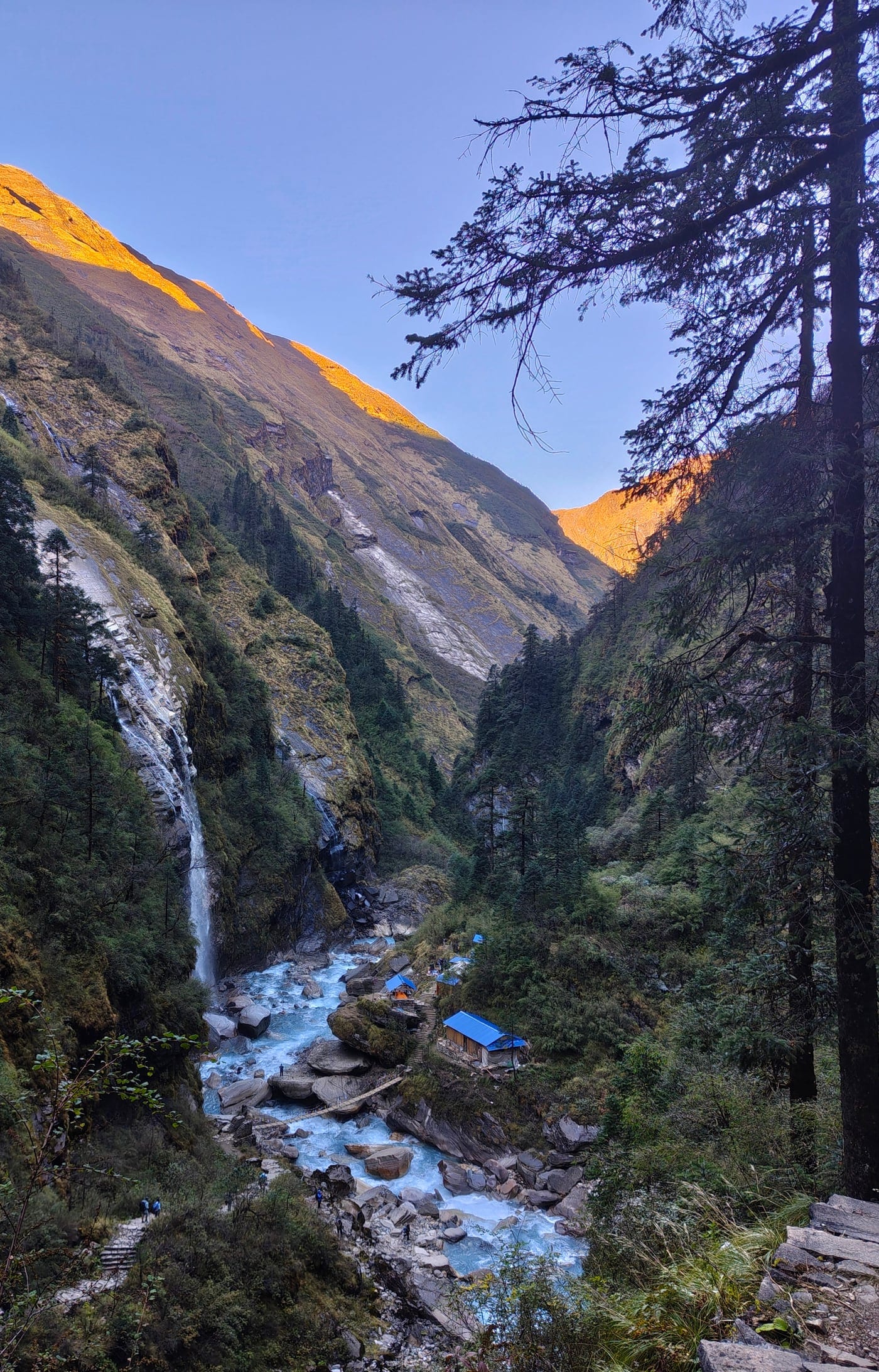
Phutphute Jharna, October 2025
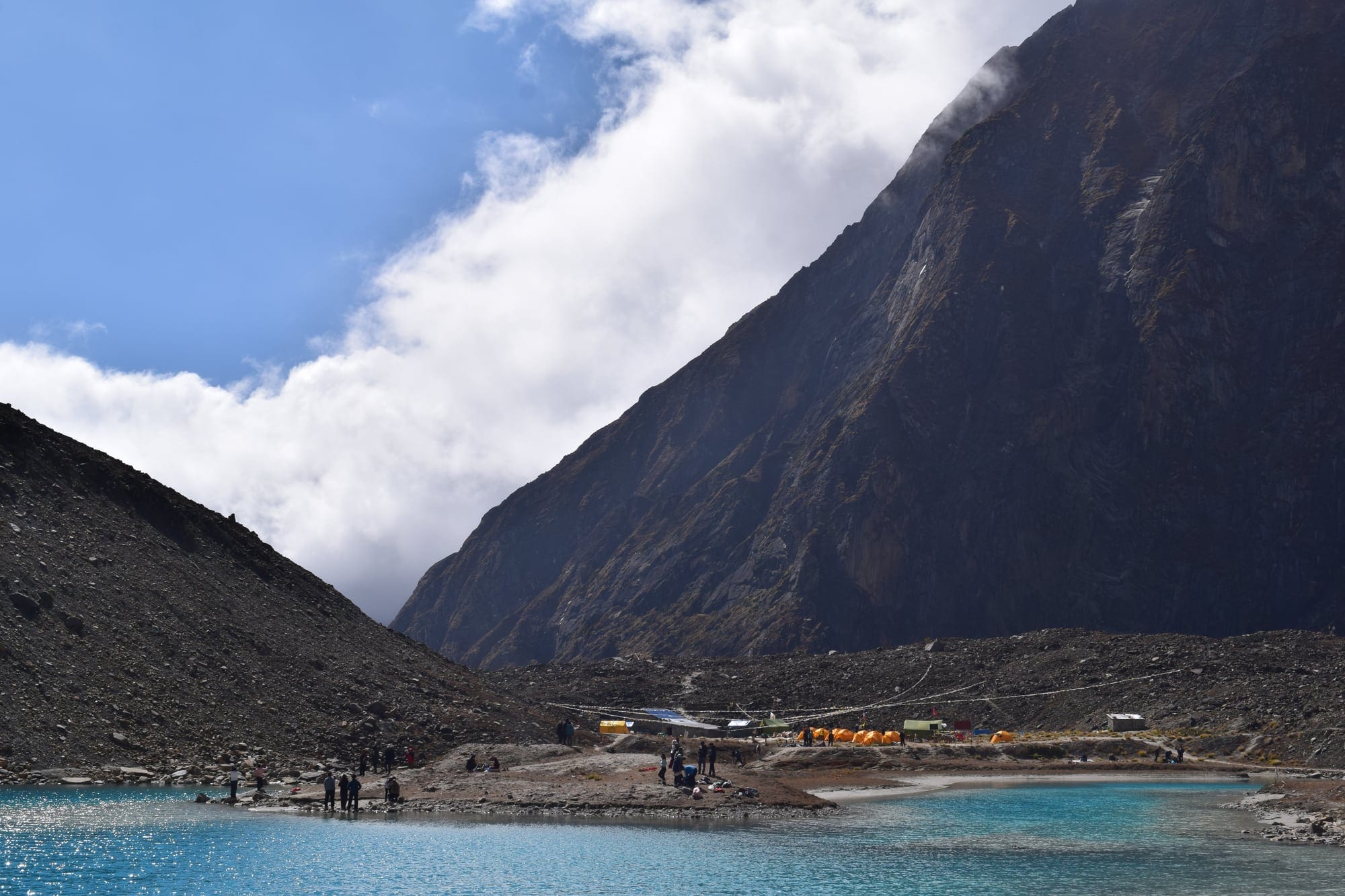
The lakes sit at 4,050m, directly under the north face.
You sleep here.
Panchakunda, October 2025
Day 4
Panchakunda → North Annapurna Base Camp → descend to Sandi Kharkahardest day
Sleep 3,220mhigh point 4,190mwalking hours to be confirmed
The crux, and longer than most companies admit. An early climb to the base camp at 4,190m, then a descent of nearly 1,000m all the way to Sandi Kharka at 3,220m on tired legs. Trekking poles matter. Know this day is coming before you book.
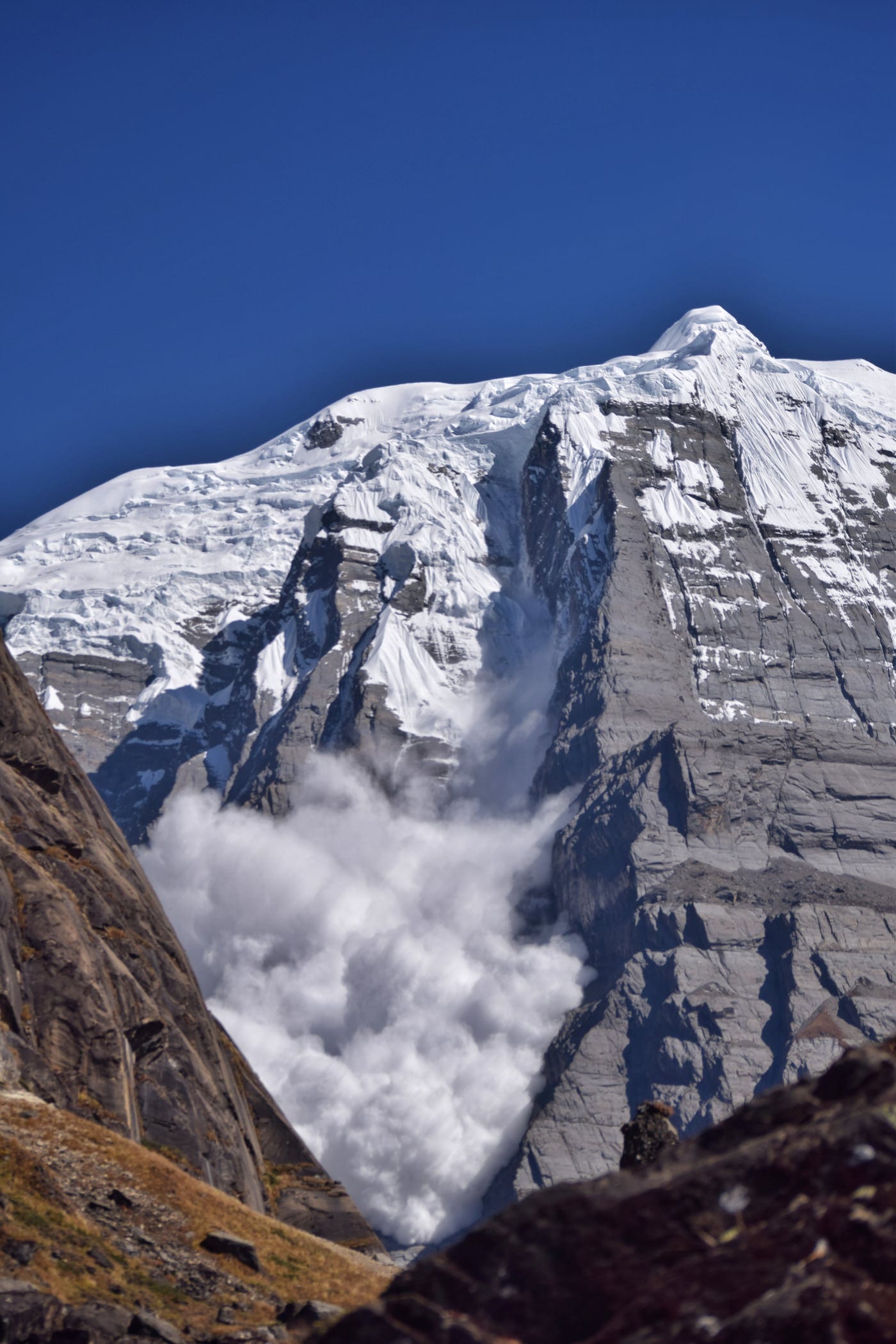
Annapurna, from the trail, October 2025
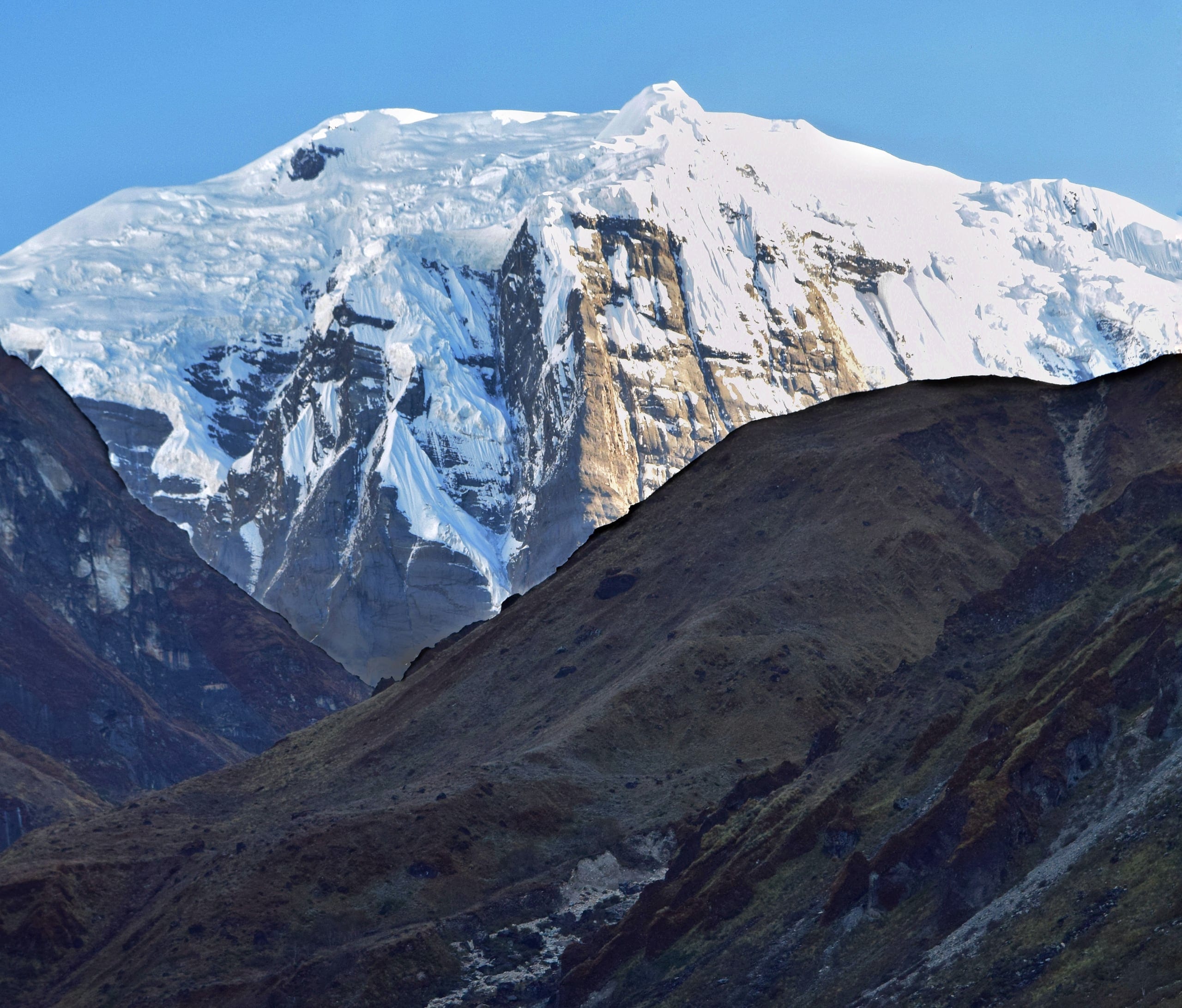
Annapurna I, from the North Annapurna approach, October 2025
The north face of Annapurna I, from the base camp at 4,190m.
The high point, and the morning the trek is for.
Day 5
Sandi Kharka → Tatopani → Pokhara
Sleep to be confirmedwalking hours to be confirmed
Down to Tatopani and back on the road to Pokhara. The trek ends here.
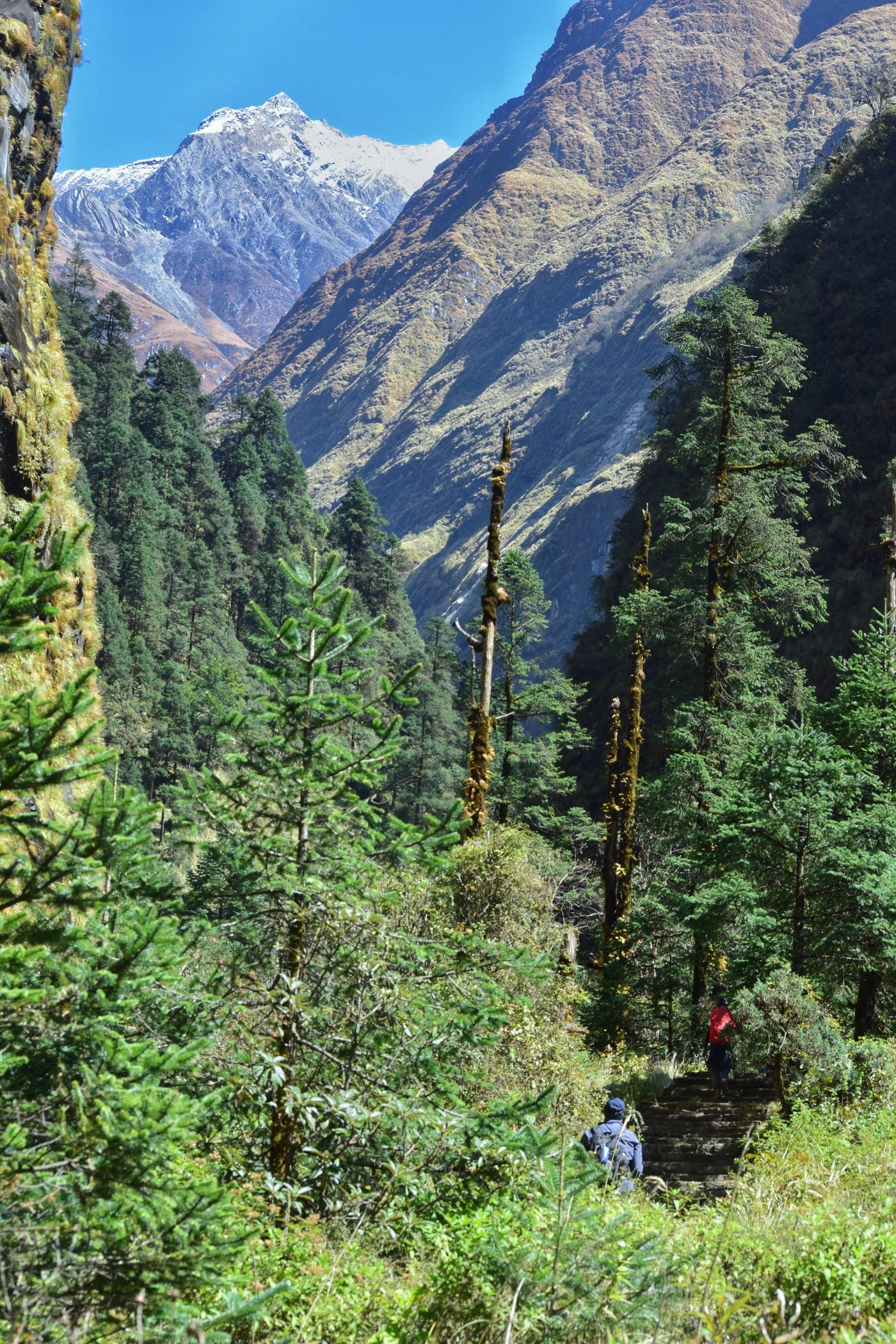
Miristi Khola valley, October 2025
What the price includes
Included
- Pokhara ⇄ Tatopani road transport
- Jeep to and from the Humkhola roadhead
- Licensed guide throughout, and guide insurance
- ACAP permit
- Lodge accommodation on trek
- All meals on trek — breakfast, lunch and dinner
Not included
- Travel to and from Nepal
- Travel insurance with helicopter evacuation cover — mandatory on this route, verified before departure
- Personal equipment, including trekking poles
- Hot showers, wifi and device charging where they exist at all
- Bottled or boiled water, drinks and snacks
- Tips and donations
- Costs arising from early descent, weather delay or route change
Who walks with you
Guide portrait
photograph pending
Guide — to be named
- Licence
- being collected
- This route
- being collected
- Guiding
- being collected
Every guide is named here with their licence number and how many times they have run this route. Those details are being collected and will appear before anything is sold. A licence is a legal minimum, not a quality claim.
Along the way
Our own photographs from the route. Every one names where it was taken and when.
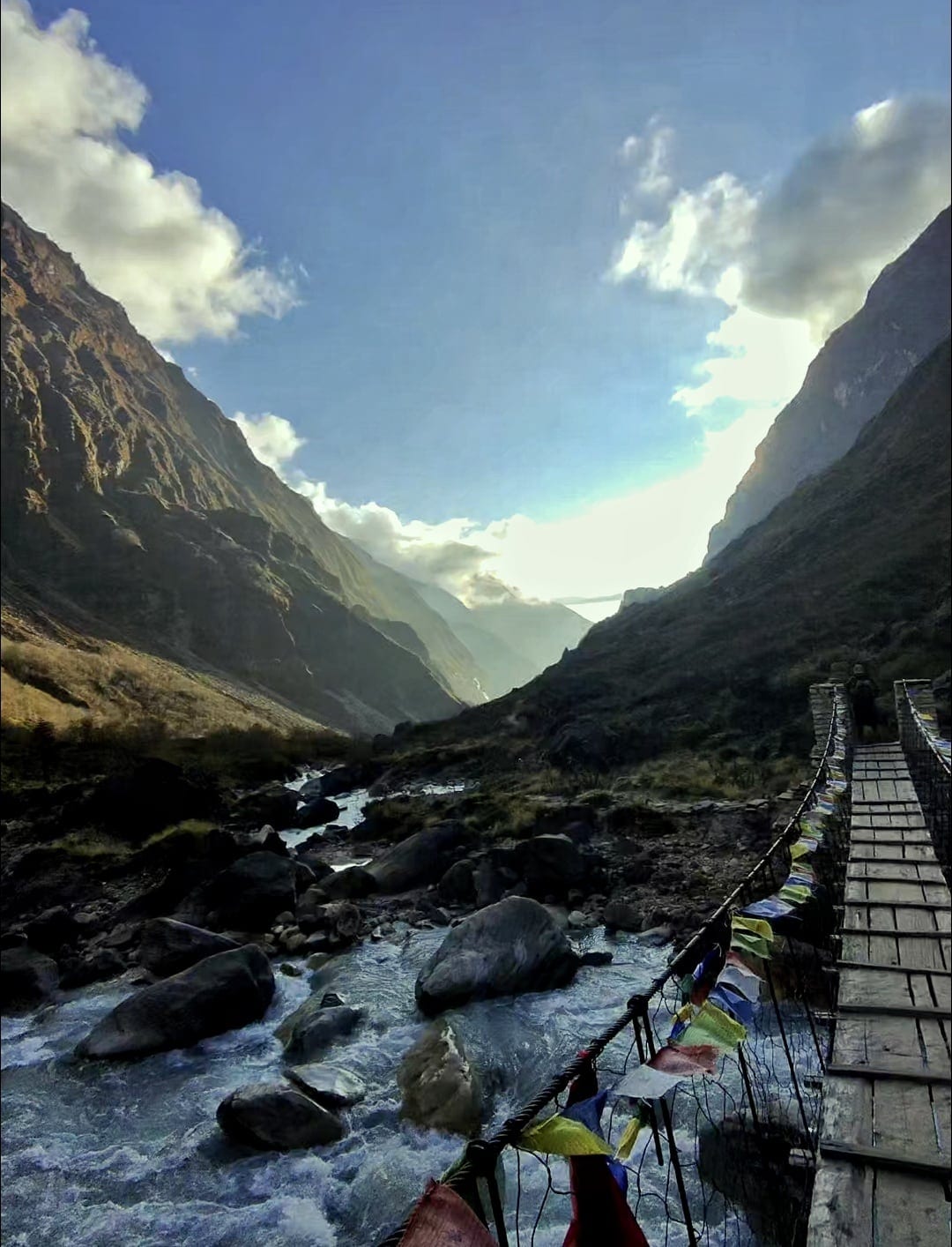
Miristi Khola valley, October 2025
Miristi Khola valley, October 2025
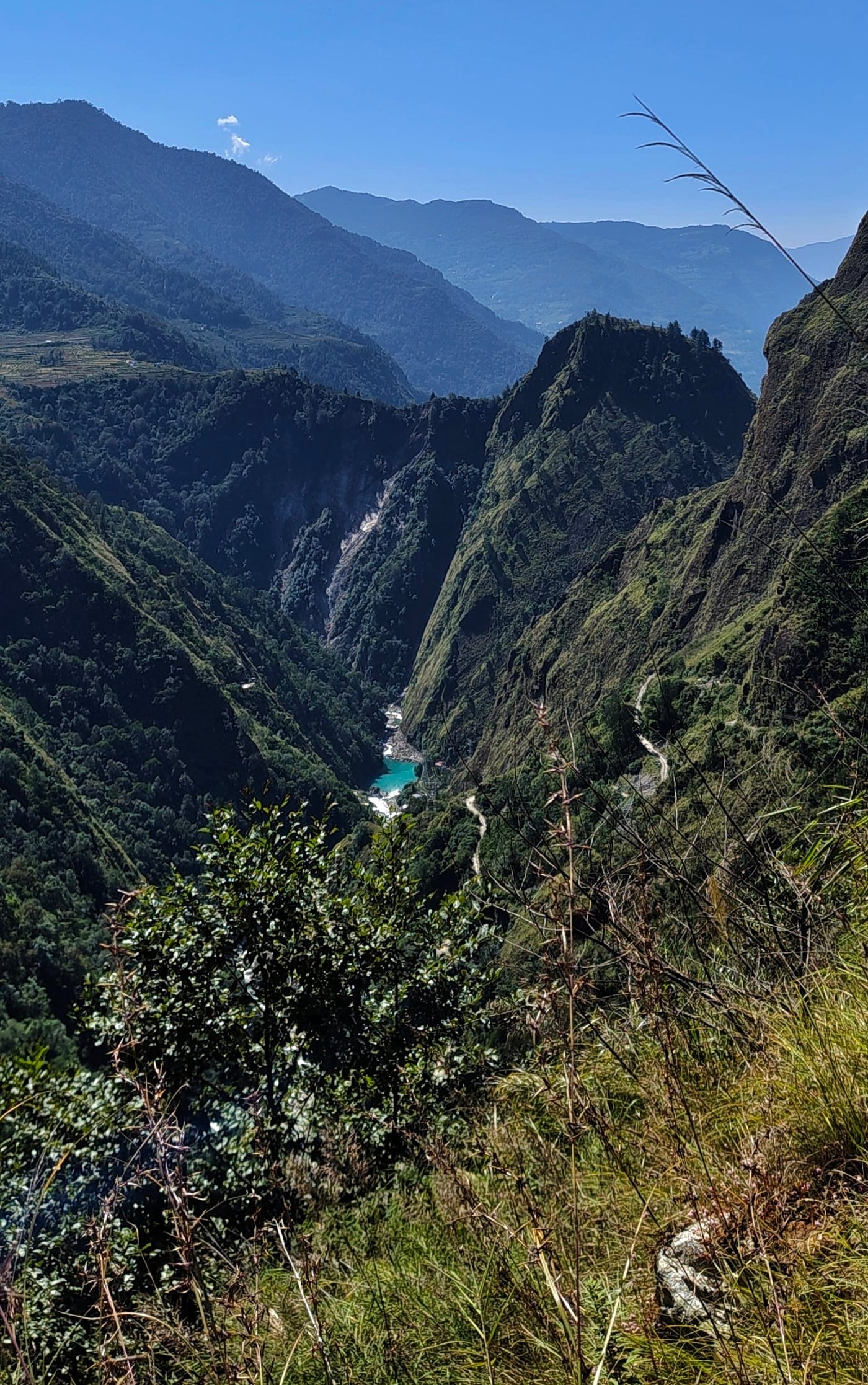
North Annapurna approach, October 2025
What we would tell a friend
- Day 4 is the crux and it is longer than most companies admit: up to North Annapurna Base Camp at 4,190m, then a full descent to Sandi Kharka at 3,220m — nearly 1,000m down after the high point, on tired legs. Trekking poles matter. Know this day is coming before you book.
- Lodges are basic and sparse. This is not a teahouse trek in the Annapurna Base Camp sense.
- There is no dedicated acclimatisation day in the standard five-day plan. Ask about an extra night at Gupha Phat or Panchakunda if you want a gentler profile.
This is not for you if
- You have never spent a night above 3,500m.
- You need lodges with hot showers and wifi — they mostly are not here.
- You want company on the trail. You likely will not have it.
- You are not comfortable being a long way from a road for several days.
We would rather you walked away here than three days up the trail.
A teahouse room on the route
photograph pending
Photograph pending — place and month to follow
Dal bhat, most nights
photograph pending
Photograph pending — place and month to follow
Safety, and who decides
Turnaround is the guide's call, not yours and not ours. That is the whole point of writing it down before anyone is tired, cold and four days from a road.
We take no commission on evacuation flights.
being confirmed This is what we commit to and what we are getting in writing from our partner. Until that is signed we will not present it as settled — a promise about rescue flights is exactly the claim this industry has abused.
- At altitude
- Daily checks from Gupha Phat upward. The gain to 4,050m across two days is fast and there is no acclimatisation day in the standard plan — ask for an extra night if you want a gentler profile. Turnaround is the guide's decision, applied against written criteria, and descent is the treatment.
- Evacuation
- Travel insurance carrying helicopter evacuation cover is mandatory on this route and we verify the policy before you fly. Evacuation is arranged through your insurer, and we take no commission on the flight.
- Weather
- The guide reroutes or turns the group. What a lost day costs and who bears it is set by the disruption policy, which is not yet agreed with our partner.
Travel insurance carrying helicopter evacuation cover is mandatory on every journey we run, and we check the policy before you fly.
When it does not go to plan
Weather closes trails, altitude turns people around, and people get ill. Here is what we do in each case, and who carries the cost.
Altitude symptoms at Panchakunda (4,050m) or on the day-4 climb.
- How often
- A real risk on this profile. Sleeping altitude goes from 2,883m at the roadhead to 4,050m in two days, with no acclimatisation day built in.
- What we do
- The guide monitors daily and calls the turnaround. Descent begins immediately, and on this route the descent to Sandi Kharka is substantial.
- Who pays
- Your insurance covers evacuation. Costs arising from an early descent are not refundable.
Weather closes the approach above Gupha Phat.
- How often
- Occasional at the edges of both seasons.
- What we do
- The guide turns the group. On a route this quiet and this remote, turning early is the normal call rather than the exceptional one.
- Who pays
- Not yet agreed with our partner. We will not publish a policy we have not confirmed.
A medical event a long way from the road.
- How often
- Uncommon, but the consequence is heavier here than on the popular trails.
- What we do
- Descend with the guide where possible; helicopter evacuation through your insurer where it is not. We verify your policy carries evacuation cover before departure.
- Who pays
- Your insurer. We take no commission on evacuation flights — being confirmed in writing with our partner.
This is the journey we run most. Want to add nights, a better hotel, Chitwan, or plan something different in Nepal? Message us — we plan the whole trip, not just the trek.
Walk Panchakunda & North Annapurna Base Camp with us
Tell us roughly when and how many of you. Six questions, no account, and a person answers — within 24 hours.